Helping Newcomers Thrive in Canada | Immigration Guides · Resources · Community
How to Apply for Canadian Permanent Residency: A Step-by-Step Guide
Deciding to move to Canada is one of the most significant and life-changing choices a person can make. Whether you are drawn by world-class healthcare, exceptional public education, stunning natural landscapes, or a multicultural society that celebrates diversity, Canada consistently ranks among the most desirable destinations for immigrants worldwide. But turning that dream into a reality requires navigating a structured process — and understanding how to apply for Canadian permanent residency is where that journey truly begins. This guide will walk you through every step of the permanent resident application process clearly and confidently, so you can move forward with the knowledge and tools you need.
What Is Canadian Permanent Residency?
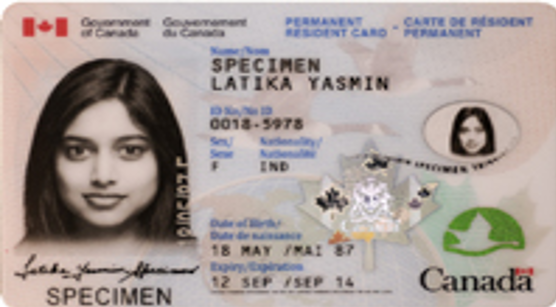
Canadian permanent residency grants foreign nationals the legal right to live, work, and study anywhere in Canada indefinitely. As a permanent resident, you have access to most social benefits that Canadian citizens enjoy — including healthcare and education — while retaining the citizenship of your home country. After meeting residency obligations (typically 730 days within five years), you become eligible to apply for Canadian citizenship. A PR card Canada is issued as official proof of your status, valid for five years and renewable. Permanent residency is the gateway between temporary status and full citizenship, making it one of the most sought-after immigration milestones in the world.
STEP 1 Determine Your Eligibility
Before anything else, you must confirm that you qualify for a Canadian immigration program. Eligibility criteria vary by pathway, but most programs assess the following core factors:
● Age: Most programs favour applicants between 18 and 45 years old.
● Language proficiency: You must demonstrate English or French ability through approved tests such as IELTS, CELPIP (English) or TEF Canada, TCF Canada (French).
● Work experience: Skilled work experience — either Canadian or foreign — is required under most federal programs.
● Education: A post-secondary credential, along with an Educational Credential Assessment (ECA) for foreign degrees, is typically required.
● Settlement funds: You must prove sufficient financial resources to support yourself and any dependants upon arrival.
● Admissibility: A clean criminal record and good health are mandatory.
Use the official IRCC application portal and the Come to Canada tool at canada.ca to get a preliminary assessment of which programs you may qualify for.
STEP 2 Choose the Right Immigration Pathway
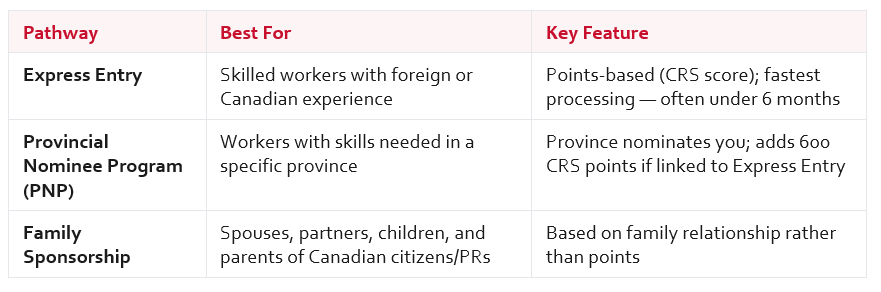
Canada immigration 2024 and beyond offers multiple routes to permanent residency. Selecting the correct pathway is critical to your success. The three most common are:
Express Entry is the most popular federal route and manages three programs: the Federal Skilled Worker Program (FSWP), the Canadian Experience Class (CEC), and the Federal Skilled Trades Program (FSTP). Candidates are ranked using the Comprehensive Ranking System (CRS) and the highest scorers receive an Invitation to Apply (ITA) in regular draws. If you have a provincial job offer or connections to a specific region, the PNP can be an excellent alternative or complementary route.
💡 Pro Tip
Not sure which pathway suits you? Use IRCC’s free online eligibility tool at canada.ca/come-to-canada before investing in language tests or assessments.
STEP 3 Gather Your Documents
A complete and well-organised application is your strongest asset. Missing or incorrect documents are among the leading causes of delays and refusals. Begin collecting the following well in advance of your intended submission date:
● Valid passport (with at least six months of remaining validity beyond your planned travel date)
● Language test results (IELTS, CELPIP, TEF, or TCF — issued within the last two years)
● Educational Credential Assessment (ECA) report from a designated organisation such as WES or IQAS
● Proof of work experience (reference letters, pay stubs, employment contracts, T4 slips)
● Proof of settlement funds (bank statements from the last three to six months)
● Police certificates from every country where you have lived for six months or more since age 18
● Birth certificates and marriage certificates (if applicable)
● Provincial nomination letter (if applying via PNP)
Every document not in English or French must be accompanied by a certified translation. Store digital copies in a secure cloud folder for easy upload to the IRCC application portal when the time comes.
Organising your documents early can significantly reduce stress and processing delays.
STEP 4 Submit Your Application to IRCC
Once you receive your Invitation to Apply (ITA) through Express Entry or a nomination through PNP, you have a limited window, typically 60 days to submit a complete application through the IRCC secure online portal. Here is what happens during this stage:
1. Log in to your IRCC secure account and select the appropriate application form (e-APR — electronic Application for Permanent Residence).
2. Complete all required forms accurately. Even minor errors or inconsistencies can trigger a refusal.
3. Upload all supporting documents in the accepted file formats (PDF, JPEG) and within size limits.
4. Pay the required fees: the permanent resident application processing fee.
5. Submit and save your Application Number for all future correspondence.
Double-check every section before hitting submit. Once your application is received, IRCC will send an Acknowledgement of Receipt (AOR) confirming they have your file.
STEP 5 Wait for Processing and Attend Your Medical/Biometrics
After submission, the waiting period begins. For most Express Entry applicants, processing takes between 6 and 12 months, depending on application volumes and IRCC capacity. During this time, you will likely be asked to:
● Submit biometrics: Fingerprints and a digital photograph at a designated Visa Application Centre (VAC) near you. You will receive a biometrics instruction letter from IRCC.
● Complete an immigration medical exam (IME): Conducted by an IRCC-approved panel physician. Results are sent directly to IRCC by the physician — do not attend your family doctor for this exam.
● Respond to any Additional Document Requests (ADR): IRCC may ask for updated information. Respond promptly to avoid delays to your file.
Monitor your IRCC secure online account regularly. You may also receive a Passport Request (PPR), which signals that a final decision is imminent and that IRCC needs your travel document to issue the Confirmation of Permanent Residence (COPR).
📋 Note
Biometrics are valid for 10 years. If you have provided them recently for a visitor or work visa application, you may not need to re-submit.
STEP 6 Receive Your PR Card and Land in Canada
The final stage is both the most exciting and the most meaningful. Once IRCC approves your application, you will receive your Confirmation of Permanent Residence (COPR) document, which serves as your temporary proof of status. You must then complete your “landing”, your official entry to Canada as a permanent resident before the expiry date printed on your COPR. At the border, a Canadian Border Services Agency (CBSA) officer will verify your documents, confirm your identity, and officially grant you permanent resident status. Your PR card Canada will be mailed to your Canadian address within a few weeks of landing. This wallet-sized card is essential for re-entry to Canada after international travel. Welcome home!
Common Mistakes to Avoid
Even well-prepared applicants can stumble on avoidable errors. Based on patterns observed across thousands of permanent resident applications, here are the most critical pitfalls to watch for:
● Misrepresentation: Providing false or misleading information — even unintentionally — can result in a permanent ban from Canada. Always be truthful and thorough.
● Outdated language scores: Test results must typically be less than two years old at the time of application. Book retests proactively if yours are close to expiring.
● Incomplete reference letters: Work experience letters must include your job title, duties, hours per week, salary, and be on company letterhead with a supervisor’s signature.
● Missing certified translations: Any document not in English or French must include a certified translation and an affidavit from the translator.
● Applying under the wrong NOC code: Your work experience must align with the correct National Occupational Classification (NOC) TEER code for your program.
● Ignoring IRCC correspondence: Failing to respond to requests within the given deadline can lead to file abandonment.
⚠️ Important
Be cautious of unlicensed immigration consultants. Only authorised representatives, lawyers or Regulated Canadian Immigration Consultants (RCICs) registered with the College of Immigration and Citizenship Consultants (CICC) are permitted to represent you for a fee.
Applying for Canadian permanent residency is a journey that demands patience, precision, and planning — but it is absolutely achievable. Hundreds of thousands of newcomers successfully land each year through pathways like Express Entry, the Provincial Nominee Program, and family sponsorship, transforming their lives and contributing enormously to Canadian communities. The key is to start early, stay organised, understand the specific requirements of your chosen program, and never hesitate to seek professional guidance when navigating complex aspects of your IRCC application. Canada is a country built by and for people who dare to make the journey. With the right information and the right support, your PR card is closer than you think.
This article is for informational purposes only and does not constitute legal immigration advice. Immigration laws and processing times are subject to change. Always refer to official IRCC resources at canada.ca or consult a regulated immigration professional.